 ENCIETY
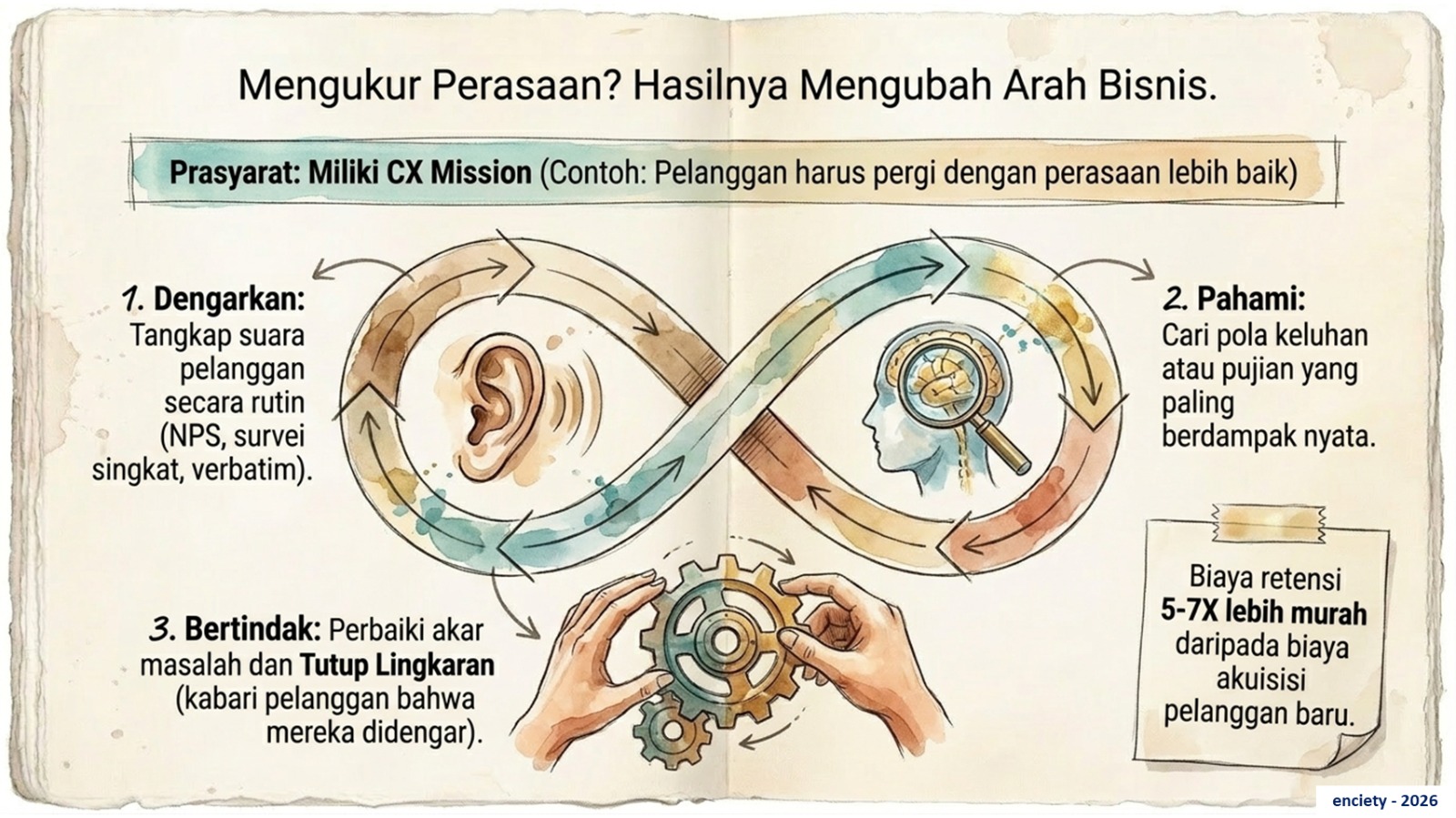
“CX sounds important, but how do we manage it—and how do we know it is working?” CX that is neither managed nor measured is good intent without accountability.
Start with the Right Question
Before tools or metrics, get clear about the experience you want customers to have. A CX mission is a simple statement of how you want customers to feel whenever they interact with your business.
For a small business: “Every customer leaves feeling better than when they arrived.” For a larger company: “Every client feels heard, gets the right solution, and knows we are there for them—not only while a contract is active, but when a problem arises.”
Without a mission, teams guess. With one, operational decisions have a compass.
Three Stages of Managing CX
1. Listen. Collect customer feedback systematically. It need not be a long survey. Asking one consistent question is better than asking nothing: “How likely are you to recommend us, and why?” This is the basis of Net Promoter Score (NPS). A small business can ask directly and keep notes in a spreadsheet.
2. Understand. Raw data is not yet insight. Find where customers are most satisfied or frustrated, and what they praise or complain about most. Prioritize issues by frequency and effect on loyalty, not by which complaint is loudest.
3. Act and close the loop. Feedback without action is wasted. Closing the loop means letting customers know their concern was heard. Few businesses do this consistently, and it can make a meaningful difference to loyalty.
Connecting CX to Revenue
Leaders often ask, “What is the return?” It can be considered from three angles:
- Retention costs: Acquiring a new customer can cost five to seven times more than keeping an existing one.
- Churn prevention: A single corporate customer leaving can mean hundreds of millions of rupiah in lost annual revenue. CX can surface warning signs before the decision is made.
- Organic growth: Satisfied customers recommend a business, often at little acquisition cost.
To estimate the opportunity, calculate the annual value of an active customer, estimate the share at risk of leaving, model what retaining 20% of that group could mean, and compare it with the cost of a CX program.
Simple Ways for Small Businesses to Measure CX
- Ask for NPS after major transactions and track it month to month.
- Calculate the complaint rate and watch whether it rises or falls.
- Track repeat purchases as a direct sign of loyalty.
- Record customers’ own words when they praise or criticize the experience.
Six months of simple, consistently collected data can change how you run a business.
This is the fourth article in “Talking CX: From Coffee Stalls to Corporations.”